
Thirty nautical miles off the coast of Castellon, the Columbretes Islands are one of the western Mediterranean's best-kept secrets. This small volcanic archipelago, declared a Natural Park and Marine Reserve, offers an experience unlike any other coastal destination in Spain.
A unique volcanic archipelago
The Columbretes consist of four groups of islets: La Grossa (the main island, home to the historic lighthouse), La Ferrera, La Foradada and El Carallot. The archipelago has volcanic origins dating back millions of years, and its rock formations create underwater landscapes of extraordinary beauty. Basalt columns and submerged lava tunnels are a spectacular sight for divers and snorkellers.
The marine reserve: a biodiversity treasure
Since 1990, the waters surrounding the Columbretes have been a Marine Reserve, allowing the recovery of an exceptional ecosystem. The waters boast transparency exceeding 30 metres of visibility, and the seabeds harbour biodiversity including giant groupers, lobsters, barracuda and posidonia meadows. It is one of the few places in the Mediterranean where you can swim alongside species that have disappeared from other areas.
How to get to the Columbretes Islands
There is no regular transport to the Columbretes: you can only reach them by sea, and always from the coast of Castellón. The usual departure point is the port of Grao de Castellón, around 30 nautical miles from the archipelago. On an excursion boat the crossing takes about 2 hours; by sailing yacht, a little longer.
There are two ways to visit: joining an organised excursion (which handles the permits for you and usually includes a guided visit to La Grossa island with the park wardens) or sailing on a private boat. In the latter case you will need an anchoring permit issued by the Valencian regional government, which limits the number of daily vessels, so it is best to request it in advance. Landing on La Grossa also requires prior authorisation.
What to see and do on the Columbretes
Snorkelling is the star activity: the volcanic rocky seabeds create a perfect habitat for observing abundant marine life. You can also visit the La Grossa lighthouse (with prior landing permission), watch seabirds such as the Audouin's gull or Eleonora's falcon, and simply enjoy a swim in waters of a purity you will not find anywhere else along the Spanish coast.
Looking for that same feeling, but accessible today?
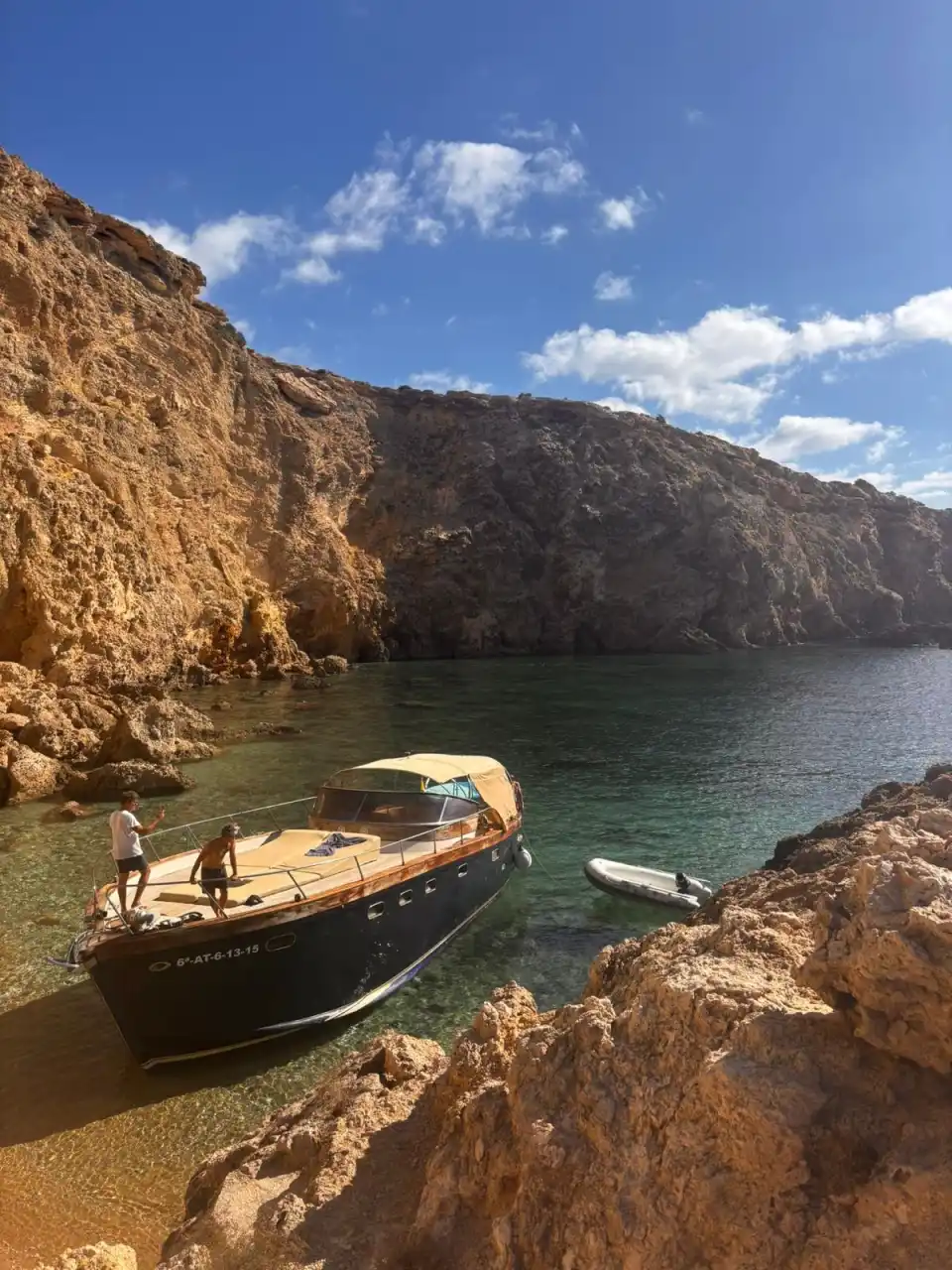
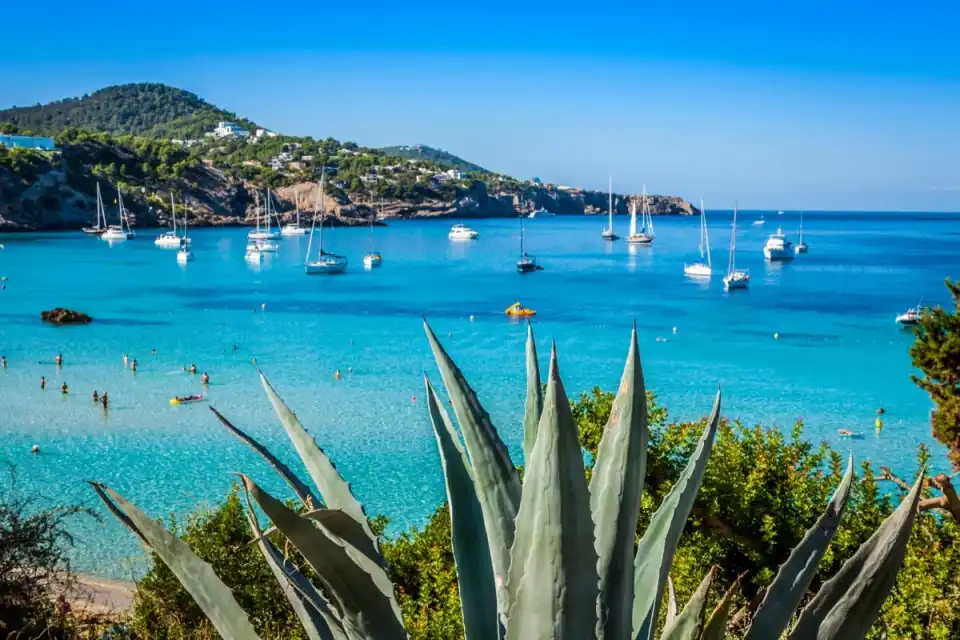
The Columbretes are unique, but access is limited and depends on permits and the weather. If what draws you is that idea of wild nature reachable only by sea — untouched coves, crystal-clear water, snorkelling and calm anchorages — you can live it right now with us in Ibiza and Formentera. Our Island Explorer experience takes you to the island's most unspoilt corners, with the freedom to adapt the route to the best moment of the day. Discover our fleet and design your own trip.